
H1: Business Logo Design: How to Create a Logo That Actually Works for Your Brand

Written by Jack Devis
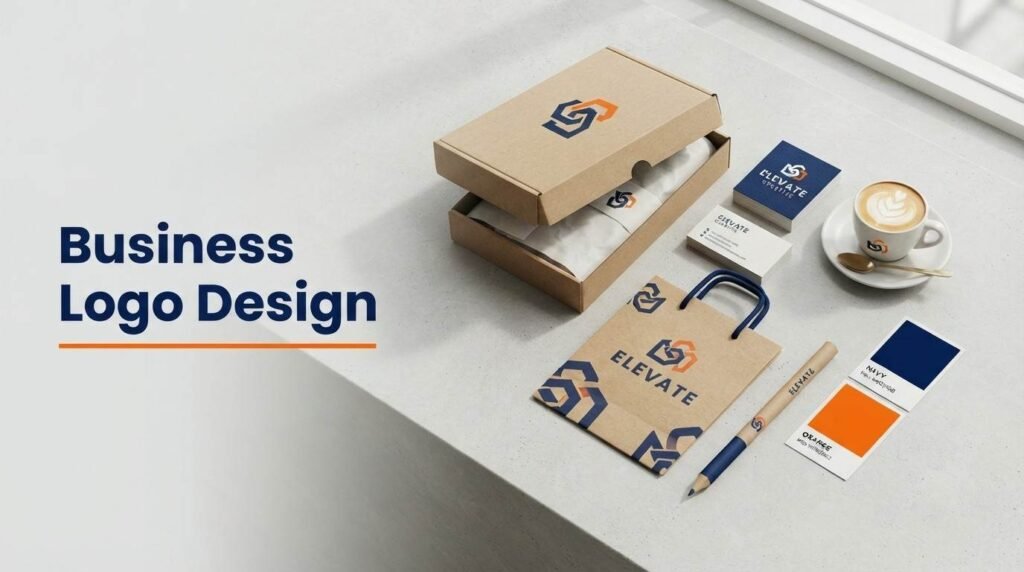
Business logo design is the process of creating a visual mark that identifies your company and makes it recognizable across every place customers meet it: your website, packaging, invoices, social profiles, and signage. A good business logo is simple, memorable, versatile, and appropriate for your industry and audience.
Most founders treat the logo as a finishing touch. In reality, it is one of the first decisions that shapes how people see your business. It sits on your website header, your product labels, your email signature, and your delivery boxes. If it is hard to read, hard to remember, or off-brand, you pay for that every day.
This guide walks through what makes a logo work, how the design process runs, how to choose the right type of designer, and the mistakes worth avoiding.
Why Business Logo Design Matters
A logo does not make your business succeed on its own. What it does is give people something quick to recognize and trust.
Think of it as shorthand. When a customer sees your mark on a social post, a package, or a search result, it should instantly say “this is that brand.” That recognition builds slowly through repetition, which is why a logo that changes every year never gets the chance to stick.
A strong logo also signals care. A clean, consistent mark tells a first-time visitor that the business pays attention to details. A pixelated or mismatched one does the opposite, even if the product is excellent.
What Makes a Good Business Logo?
Designers tend to agree on a handful of principles. You can use them as a checklist.
Simple. If someone cannot describe your logo after seeing it for a few seconds, it is probably too busy.
Memorable. It should have one clear idea, not five. Nike’s swoosh is the classic example. The designer, Carolyn Davidson, was reportedly paid just $35 in 1971, and the mark became one of the most recognized symbols in the world. The lesson is not the price. It is that a simple shape, used consistently for decades, can carry a brand.
Versatile. Your logo has to work small (a social media avatar or favicon) and large (a storefront sign), in color and in black and white.
Appropriate. A law firm and a children’s toy brand should not look alike. The style should match your industry, audience, and tone.
Timeless enough. Trends fade quickly. You do not need to ignore them, but a logo built entirely on this year’s trend will look dated soon.
The Main Types of Business Logos
Choosing a logo type early saves a lot of back-and-forth later.
| Logo Type | What It Is | Best For |
| Wordmark | Your business name in custom lettering | Brands with short, distinctive names |
| Lettermark | Initials only | Companies with long names |
| Symbol / Icon | An image or shape that stands alone | Established brands with strong recognition |
| Combination Mark | Icon plus text | Most new businesses, since it is flexible |
| Emblem | Text inside a badge or crest | Traditional, craft, or heritage brands |
If you are launching a new business, a combination mark is usually the safest starting point. It gives you a full logo for the website header and a standalone icon for small spaces.
How the Business Logo Design Process Works
Whether you design it yourself or hire someone, the steps are almost always the same.
1. Define your brand first
Before any sketching, answer a few questions in writing:
- Who is your customer?
- What do you want people to feel when they see your brand?
- What makes you different from your top three competitors?
- Which three words describe your brand personality?
A designer who receives clear answers to these will produce better work in fewer rounds.
2. Research your market
Look at what competitors and respected brands in your industry are doing. The goal is not to copy. It is to avoid looking identical to everyone else, and to understand what customers in your category expect.
3. Sketch and explore concepts
Good logos rarely come from the first idea. Explore several directions on paper or in a design tool before choosing one to refine.
4. Choose typography and color
Typography carries more personality than most people expect. A serif font reads traditional and established; a clean sans-serif reads modern and approachable.
On color, be careful with claims like “blue builds trust” or “red creates urgency.” Color associations vary by culture and context, and the research is mixed. A more reliable approach is to pick colors that suit your audience, stand out from direct competitors, and stay readable in every format.
5. Test it in real conditions
Place the logo on a website mockup, a product label, a business card, a social avatar, and a shipping box. If it fails at small sizes or loses clarity in one color, fix it now.
6. Prepare the final files
You should receive:
- Vector files (SVG, AI, EPS) that scale without losing quality
- PNG with transparent background for web use
- Color and monochrome versions
- A simple usage guide covering minimum size, spacing, and approved colors
Many businesses choose to work with a branding team that delivers these files in one organized package. Brands such as Top Branding Altimeter offer logo design as part of a broader branding service, which can help keep your logo consistent with the rest of your identity.
DIY, Freelancer, or Agency: Which Should You Choose?
| Option | Typical Cost | Speed | Best For |
| DIY / logo maker | Low | Fast | Very early-stage ideas and tight budgets |
| Freelance designer | Medium | Moderate | Startups and small businesses wanting custom work |
| Branding agency | High | Slower | Businesses needing a full identity system and strategy |
A logo maker can work as a temporary placeholder, but templates are often reused by other businesses, which weakens distinctiveness. If the logo will sit on your packaging, storefront, and ads for years, a custom design from a professional is usually worth the investment. Working with a team that specializes in professional business logo design services also means you get a concept built around your audience and industry rather than a generic template.
Whichever route you choose, check that you receive full ownership rights and editable source files. Many disputes later come from unclear usage terms.
Common Business Logo Design Mistakes
- Too much detail. Fine lines and gradients disappear when scaled down.
- Following trends blindly. What looks fresh now may feel dated in two years.
- Using stock icons or clip art. These are not unique and can create legal trouble.
- Skipping the black-and-white test. If it only works in color, it is not finished.
- Poor font choices. Overused or hard-to-read typefaces hurt recognition.
- Ignoring where it will be used. A logo that looks great on a screen can fail on packaging, embroidery, or print.
- Copying a competitor. It confuses customers and can cause legal problems.
When Should You Redesign Your Logo?
Not every business needs a redesign. Consider one if:
- Your business has shifted direction or audience
- The logo looks unprofessional or does not reproduce well
- You have outgrown the original look
- You are merging with or acquiring another brand
If your logo only needs a refresh, small updates to typography, spacing, or color often keep recognition intact while modernizing the look.
Final Thoughts
Business logo design is less about being clever and more about being clear. A great logo is simple, flexible, and consistent with the brand it represents. Spend time on the strategy before the visuals, test the design in real situations, and keep your files organized for future use. If you would rather have experts handle the process, you can explore the logo design service at Top Branding Altimeter and see whether their approach fits your brand.
Do it well once, use it consistently, and it becomes a quiet but valuable business asset.
Frequently Asked Questions
1. What is business logo design?
Business logo design is the creation of a visual identity mark for a company, usually combining shape, typography, and color so customers can recognize the brand quickly.
2. How much does a business logo cost?
Costs range widely, from free or low-cost logo makers to professional freelancers and full agency projects. The final price depends on the designer’s experience, the number of concepts and revisions, and whether you need a full brand identity.
3. How long does it take to design a business logo?
A simple project can take a few days to two weeks. Larger branding projects with research and multiple revision rounds can take longer.
4. What file formats should I ask for?
Ask for vector files (SVG, AI, or EPS), a transparent PNG, and a PDF. Vector files are essential because they scale to any size without losing quality.
5. Can I design my own business logo?
Yes, especially for a new or low-budget business. Keep it simple and test it at small sizes. For long-term use, a professional designer usually delivers a more distinctive and versatile result.
6. What is the best type of logo for a new business?
A combination mark (icon plus text) is usually the most flexible, since you can use the full version or the icon alone.
7. Should I hire a branding company for my logo?
If you want a logo that works across packaging, web, and marketing materials, a branding company can be a good fit because it considers the whole identity, not just the mark. Review portfolios, ask about revisions and file ownership, and compare a few providers before deciding.
8. Can I trademark my logo?
Often yes, but eligibility depends on your country and how distinctive the logo is. Consult a trademark attorney or your local IP office before filing.
……………….
Enjoyed Reading? Wait! There’s More For You.
H1: Business Logo Design: How to Create a Logo That Actually Works for Your Brand
Peptide Education: A Complete Guide to Learning Peptide Science
Creative Custom Happy Meal Box Designs For Your Business
Donut Boxes: Essential Packaging for Freshness and Branding
How a Shopify Web Development Company Can Solve Your Store Challenges
Rashes That Look Like Ringworm But Aren’t
Written by Jack Devis
Meet Jack, a creative writer behind SonicMenuGuide.com. With a deep love for fast food, Jack enjoys scrabbling into the world of Sonic cuisine. Now, passionately sharing his unique experience and helping others to discover the hidden gems of Sonic. With a keen commitment to analyzing ingredients, pricing, and calorie information, Jack’s Write ups empower you to make informed choices.